
- nubath_dev
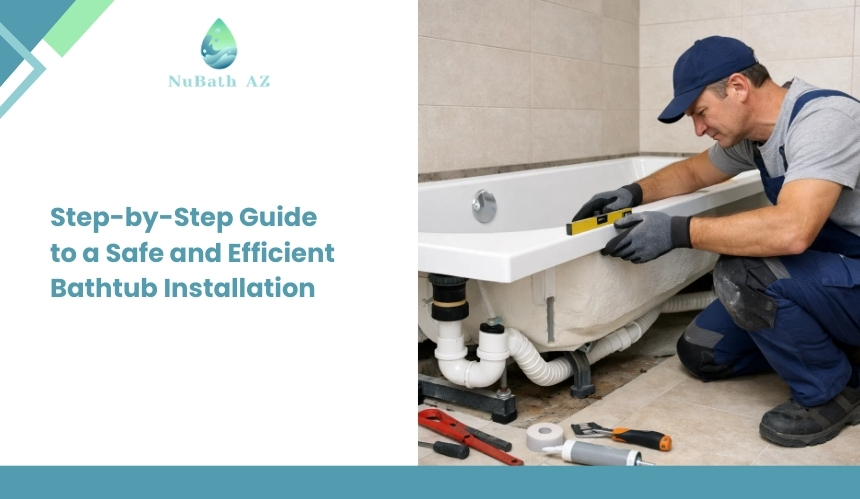
Step-by-Step Guide to a Safe and Efficient Bathtub Installation
Quick Answer: A safe and efficient bathtub installation involves proper planning, subfloor preparation, plumbing alignment, leveling, sealing, and post-installation checks. Following each step prevents leaks, water damage, and structural issues while ensuring long-term usability and safety.
Did you know? In Phoenix and surrounding areas such as Scottsdale and Glendale, improper leveling or sealing in high-heat, dry climates can cause tub materials to warp or tile edges to crack, increasing the risk of water damage over time. |
Bathrooms are one of the most frequently used spaces in a home, yet improper bathtub installation can lead to costly water damage, leaks, and structural issues. Homeowners in Phoenix and surrounding areas, such as Scottsdale, Glendale, and Ahwatukee, often face unique challenges, including uneven subfloors, older plumbing systems, and the effects of high desert heat on materials.
A step-by-step approach ensures that every element, from subfloor preparation to final sealing, is handled correctly. Following best practices not only protects the home but also makes daily use safer, reduces maintenance needs, and prolongs the life of the tub.
This guide walks you through each stage of bathtub installation, highlighting practical tips, common mistakes to avoid, and local considerations specific to Phoenix and nearby neighborhoods, so homeowners can achieve a durable, safe, and efficient installation.
Pre-Installation Planning and Preparation
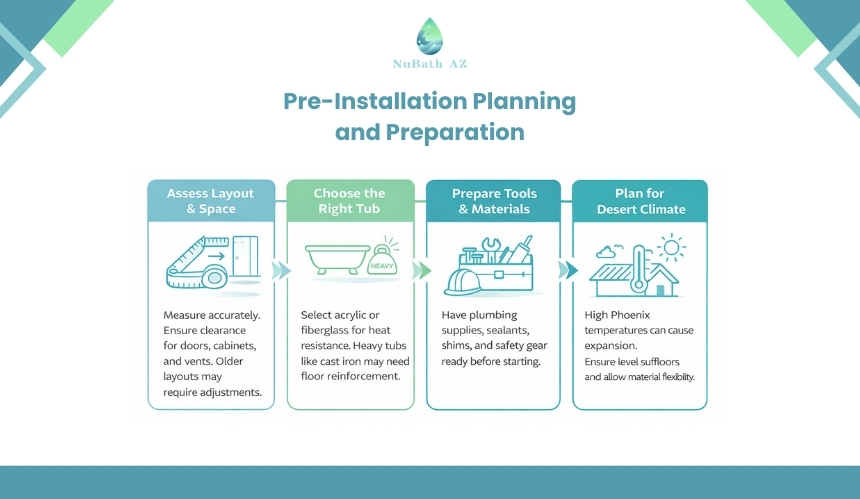
Proper planning before installing a bathtub sets the foundation for a safe and efficient process. Skipping this stage can lead to misalignment, water damage, or even costly repairs. Homeowners in Phoenix and nearby areas like Arcadia, Paradise Valley, and Tempe should consider both the bathroom layout and local environmental factors when preparing for installation.
Assessing Bathroom Layout and Space
Measure the bathroom carefully to ensure the new tub fits comfortably without obstructing doors, vents, or cabinets. Narrow or older layouts, common in neighborhoods like Encanto, may require adjustments or custom tubs to accommodate tight spaces while maintaining safety.
Choosing the Right Tub Type and Material
Select a tub style and material suitable for both your space and local climate. Acrylic and fiberglass tubs are popular in desert environments due to their durability and resistance to heat expansion, while cast-iron or freestanding tubs may require reinforced flooring to support their weight.
Preparing Tools, Materials, and Safety Gear
Gather all necessary tools, plumbing materials, sealants, shims, and personal protective equipment (PPE) before beginning. Being fully prepared prevents unnecessary interruptions and ensures each step is executed safely and efficiently.
Local Considerations: Climate and Neighborhood Examples
High desert temperatures in Phoenix can cause certain materials, like tile edges or acrylic tubs, to expand or warp. Planning for this by checking for level subfloors and allowing room for expansion helps avoid long-term damage. For instance, homes in Paradise Valley with older subfloor structures may need additional reinforcement before installation.
Plumbing and Subfloor Preparation
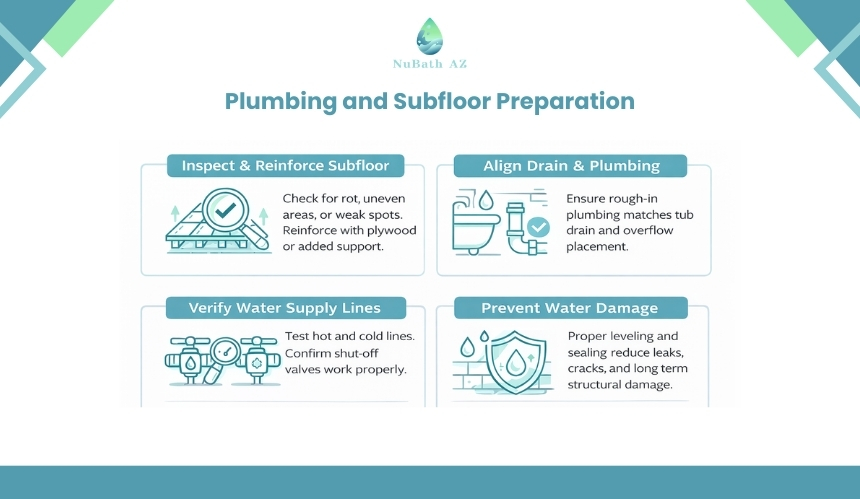
The foundation of a safe and durable bathtub installation starts with plumbing and subfloor preparation. Proper alignment and reinforcement prevent leaks, structural damage, and costly repairs. Homeowners in Phoenix and surrounding neighborhoods, such as Scottsdale, Glendale, and Ahwatukee, should consider both the condition of existing subfloors and local climate factors when preparing for installation.
Inspecting and Reinforcing the Subfloor
Before installation, inspect the subfloor for rot, uneven surfaces, or weak spots. Reinforcing the floor with additional supports or plywood ensures the tub sits level and can handle its weight, particularly for heavy freestanding or cast-iron tubs.
Did you know? Studies show that improper subfloor preparation is a leading cause of bathtub leaks, accounting for nearly 30% of bathroom water-damage claims nationwide.
Rough-In Plumbing Alignment and Drain Placement
Ensure drains, water supply lines, and overflow systems are correctly positioned before the tub is set in place. Misaligned plumbing can lead to leaks, inefficient drainage, and long-term maintenance issues.
Water Supply and Overflow Verification
Check that both hot and cold water lines function correctly and that the overflow is properly aligned to prevent flooding. Pre-testing the system reduces the risk of leaks after installation.
Preventing Water Damage in Desert Climates
Phoenix’s high heat and dry conditions can cause certain materials to expand or contract. Proper sealing and floor leveling are essential to prevent cracks or warping that could lead to leaks or damage to tile and subfloor over time.
Did you know? Homes in older Phoenix neighborhoods like Arcadia or Encanto are more prone to water damage from misaligned tubs, uneven original subfloors, and seasonal temperature fluctuations.
Removing the Existing Tub Without Damage
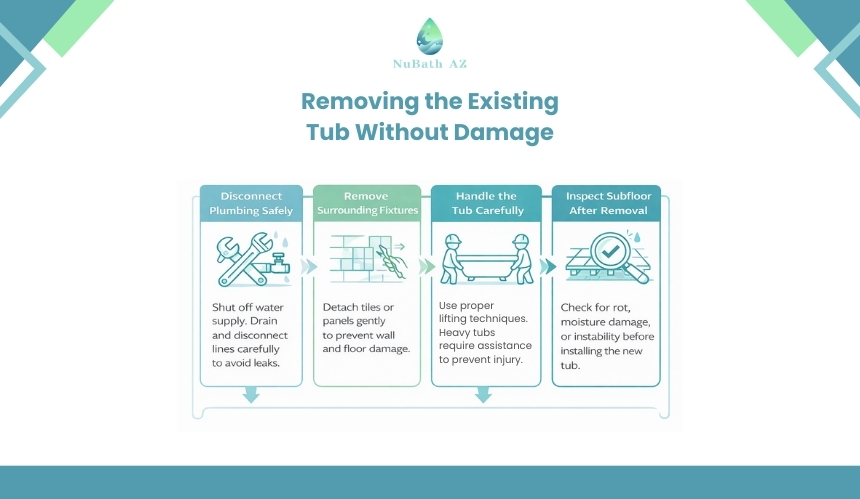
Removing an old bathtub properly is crucial to ensure the new installation is safe, efficient, and free from hidden structural issues. Many homeowners in Phoenix and surrounding neighborhoods such as Arcadia, Encanto, and Paradise Valley face challenges like aging subfloors, older plumbing, and tight bathroom layouts, which require careful removal techniques.
Draining and Disconnecting Plumbing
Before removal, shut off the main water supply and drain the tub completely. Disconnect supply lines, drains, and overflow pipes carefully to avoid leaks or water damage. Proper plumbing handling ensures the new tub can be installed without additional modifications.
Detaching Surrounding Fixtures
Remove tiles, panels, or surrounding cabinetry as needed to free the tub. In older homes, tile may be brittle, so gently chisel around the edges to prevent unnecessary cracks or damage to walls and flooring.
Handling the Tub Safely
Whether it’s a freestanding cast-iron tub or an acrylic alcove model, use proper lifting techniques and, if necessary, enlist help. Large tubs are heavy and awkward; improper handling can result in personal injury or structural damage.
Inspecting the Subfloor for Structural Integrity
Once the old tub is removed, inspect the subfloor for rot, uneven surfaces, or water damage. Many Phoenix homes, especially in Encanto and Arcadia, have subfloors that have been exposed to decades of high heat and occasional moisture leaks, which can compromise stability if not addressed.
Did you know? Improper subfloor inspection is responsible for nearly 30% of bathtub leaks reported after replacement installations. Reinforcing the floor at this stage prevents long-term damage and costly repairs.
Preparing for the Next Step
Clear debris and ensure the floor is level before positioning the new tub. This step saves time during installation and ensures a smooth workflow when connecting plumbing and securing the tub.
Preparing the Subfloor and Plumbing System
Proper preparation of the subfloor and plumbing system is critical to ensure a safe, stable, and leak-free bathtub installation. In Phoenix and surrounding areas such as Scottsdale, Glendale, and Ahwatukee, older homes often have uneven subfloors or outdated plumbing that require careful attention before installing a new tub.
Inspecting and Reinforcing the Subfloor
Check the subfloor for signs of rot, sagging, or unevenness. Reinforce weak areas with additional plywood or support beams to ensure the tub sits level and can safely bear its weight, especially for heavy tubs like cast iron or large freestanding models.
Did you know? In desert climates, subfloor expansion and contraction from heat can worsen existing unevenness, making reinforcement essential for long-term stability.
Rough-In Plumbing Alignment and Drain Placement
Verify that drain openings, water supply lines, and overflow connections are correctly positioned. Misaligned plumbing can lead to leaks, inefficient drainage, or the need for rework after installation. Accurate rough-in alignment is particularly important in older Phoenix homes where previous installations may have shifted over time.
Verifying Water Supply Lines
Test both hot and cold water lines for proper flow and pressure. Ensure shut-off valves are accessible and functional. Pre-testing avoids surprises during the final installation and reduces the risk of water damage.
Climate and Local Considerations
Desert heat in Phoenix and nearby areas can cause slight expansion in plumbing pipes and tub materials. Accounting for this during preparation ensures proper leveling and sealing, preventing warping, leaks, or cracked tile edges. Homes in neighborhoods like Paradise Valley or Arcadia may require greater attention to these factors because of older construction materials.
Preparing for Tub Placement
After the subfloor and plumbing are ready, clear the area of debris, ensure all measurements are accurate, and verify that the space can accommodate the new tub’s dimensions. This step is essential for a smooth and efficient installation.
Installing the New Bathtub
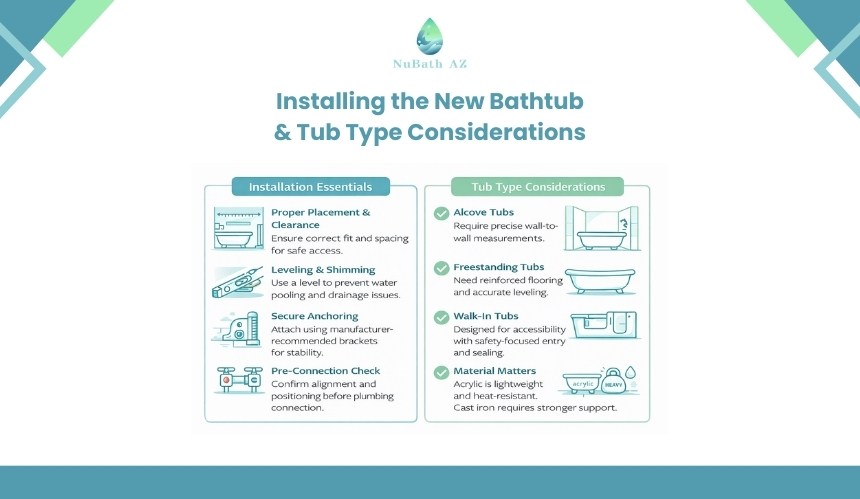
Placing a new bathtub correctly is essential to ensure stability, prevent leaks, and create a safe, long-lasting installation. In Phoenix and surrounding neighborhoods such as Scottsdale, Glendale, and Ahwatukee, careful positioning is particularly important given older subfloor conditions and the high desert temperatures that can affect materials.
Proper Placement and Clearance
Ensure the tub fits comfortably within the allocated space, allowing for door swings, cabinetry, and vents. For example, older homes in Arcadia may have tighter alcove spaces, requiring precise measurement to prevent obstruction and ensure ease of access.
Leveling and Shimming Techniques
Use a level and shims to ensure the bathtub sits perfectly horizontal. Uneven tubs can lead to water pooling, improper drainage, and long-term leaks. Pay special attention to freestanding or cast-iron tubs, which are heavier and more prone to wobbling on uneven floors.
Did you know? Even a slight ¼-inch tilt can affect water drainage efficiency and, over time, cause mold growth behind the tub.
Anchoring for Stability
Secure the bathtub using manufacturer-recommended brackets or wall anchors. Proper anchoring prevents movement during use, reducing the risk of damage or accidents. In homes with older subfloors, additional reinforcement may be necessary.
Adjustments for Different Tub Types
Walk-in, whirlpool, and freestanding tubs may require additional supports or plumbing accommodations. For instance, whirlpool tubs need extra clearance for jets and wiring, while walk-in tubs require accessible door alignment and sealing.
Pre-Connection Check
Before connecting plumbing, double-check positioning, clearance, and levelness. Ensuring everything is aligned correctly at this stage minimizes rework and ensures a smooth installation process.
Connecting Plumbing and Ensuring Functionality
A proper plumbing connection is crucial for a leak-free and fully functional bathtub installation. In Phoenix and surrounding areas such as Glendale, Scottsdale, and Ahwatukee, older homes often have plumbing lines that have shifted or worn over time, so careful alignment and testing are essential.
Aligning Drains and Overflow Systems
Ensure the tub’s drain and overflow openings match the existing plumbing. Misalignment can lead to slow drainage, leaks, or water damage. In neighborhoods with older construction, like Arcadia, verifying alignment before sealing is especially important to prevent costly repairs.
Connecting Hot and Cold Water Supply Lines
Attach supply lines carefully, checking for secure connections and proper flow. Test the hot and cold water to ensure consistent pressure and temperature control before completing the installation.
Testing Before Sealing
Run water through the tub and check for leaks at drains, supply lines, and overflow. This step ensures all connections are secure and reduces the risk of post-installation water damage.
Did you know? Pre-testing plumbing connections can prevent up to 40% of leaks commonly reported in newly installed tubs, especially in homes with older pipes.
Adjusting for Local Climate Effects
High desert temperatures in Phoenix can slightly expand pipes and tub materials. Account for this during connection and testing to ensure proper sealing and long-term performance.
Sealing, Finishing, and Protective Measures
Sealing and finishing are critical steps that protect the bathtub, surrounding surfaces, and subfloor from water damage. Proper techniques ensure durability, safety, and aesthetic appeal. Homeowners in Phoenix and nearby areas, such as Scottsdale, Glendale, and Ahwatukee, should also consider climate-specific factors, such as high heat and dry conditions, when sealing and finishing.
Applying Silicone and Waterproofing
Use high-quality silicone sealants along tub edges, corners, and joints. Waterproofing prevents water infiltration into the subfloor and walls, which is particularly important in older homes or those with tile surrounds.
Caulking Around Fixtures
Seal faucets, drains, and overflow openings carefully to prevent leaks. Proper caulking prevents water from seeping into hidden areas, reducing the risk of mold growth.
Finishing Tile or Surround Panels
Complete the installation by securing and grouting tiles or finishing panels around the tub. Ensure surfaces are level and free from gaps that could allow water to penetrate.
Installing Safety Features
For long-term safety, integrate grab bars, anti-slip flooring, and, if applicable, temperature control systems. These features reduce slip-and-fall risks and enhance usability, especially for older homeowners or those with mobility concerns.
Did you know? Adding anti-slip flooring and grab bars can reduce bathroom fall incidents by up to 50%, making these features particularly valuable for homes in older Phoenix neighborhoods.
Things to Consider for Different Types of Baths
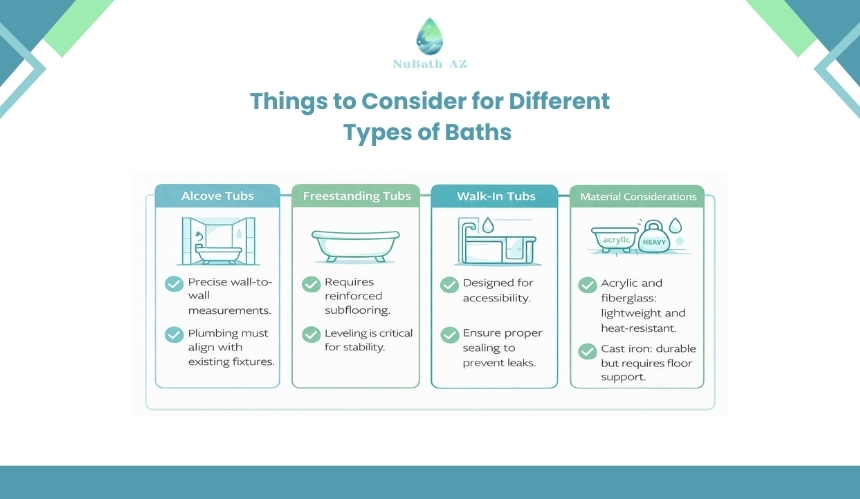
Different bathtub styles and materials present unique installation requirements and safety considerations. Homeowners in Phoenix and surrounding neighborhoods such as Arcadia, Paradise Valley, and Glendale should weigh these factors when choosing a tub to ensure both functionality and long-term durability.
Alcove, Freestanding, and Walk-In Tubs
- Alcove Tubs: Fit snugly between three walls; require precise measurements for clearance and plumbing alignment.
- Freestanding Tubs: Heavier and require reinforced subfloors; placement must consider leveling and stability.
- Walk-In Tubs: Designed for accessibility; low-threshold entry and built-in seating reduce fall risk.
Did you know? Walk-in tubs are increasingly popular in aging-in-place homes for their safety features and ergonomic design.
Material Considerations
- Acrylic and Fiberglass: Lightweight, durable, and easier to install; good for desert heat fluctuations.
- Cast Iron: Extremely durable but very heavy; requires floor reinforcement.
- Stone or Composite: High-end options; installation must account for weight and water sealing.
Accessibility and Safety Features
Consider tubs with anti-slip surfaces, grab bars, built-in seating, and thermostatic temperature controls. These features are especially important in older homes where original bathroom layouts may not have been designed for safe mobility.
Plumbing and Maintenance Implications
Different tubs have varying plumbing and maintenance needs. Whirlpool or hydrotherapy tubs, for example, require careful alignment and additional space for jets and pumps. Proper planning ensures long-term functionality and avoids leaks or water damage.
Price and Installation Costs of Different Baths
Understanding the costs associated with different bathtub types helps homeowners plan their renovation budget effectively. In Phoenix and surrounding areas such as Scottsdale, Glendale, and Ahwatukee, prices vary depending on materials, labor, and additional installation requirements.
Material Costs
- Acrylic and Fiberglass: Typically more affordable, lightweight, and easier to install.
- Cast Iron: Higher upfront cost due to weight and durability; requires reinforced subflooring.
- Freestanding or Custom Tubs: Premium options with unique design features; prices vary widely based on size and material.
Labor and Installation Charges
Professional installation ensures safety, proper leveling, and plumbing alignment. Labor costs can vary based on the complexity of the installation, with older homes in Arcadia or Encanto sometimes requiring extra preparation for uneven subfloors or outdated plumbing.
Additional Costs
- Subfloor reinforcement
- Plumbing modifications or new supply lines
- Tile or surround finishing
- Safety features like grab bars or anti-slip flooring
Budgeting Tips for Homeowners
Plan ahead to avoid unexpected expenses. Factor in both material and labor costs, and consider local professional installers familiar with Phoenix building codes and climate-specific installation challenges.
Did you know? On average, a standard acrylic tub installation in the Phoenix area costs 25–30% less than a cast iron or freestanding tub, but long-term durability and maintenance should also be considered.
Frequently Asked Questions
How long does bathtub installation usually take?
Installation typically takes 4–8 hours for standard tubs, depending on subfloor condition, plumbing alignment, and tub type. Homes in older Phoenix neighborhoods like Arcadia or Encanto may require additional prep time due to uneven floors or aging plumbing systems.
Can I safely install a bathtub myself?
DIY installation is possible for experienced homeowners, but professional installation is recommended for most Phoenix-area homes. Proper leveling, plumbing alignment, and sealing are critical to prevent leaks, water damage, or long-term structural issues.
What materials work best in Phoenix’s desert climate?
Acrylic and fiberglass tubs are ideal because they are lightweight, durable, and resistant to heat-related expansion. Heavy cast-iron tubs require reinforced subfloors to safely support their weight in older homes.
How can I prevent water damage after installation?
Ensure the subfloor is reinforced, plumbing is correctly aligned, and all edges and joints are sealed with high-quality silicone. Pay special attention to surrounding tile and paneling to protect against leaks, especially in high-heat Phoenix areas.
Are there local building codes that affect bathtub installation?
Yes. Phoenix and nearby municipalities, such as Scottsdale and Glendale, have building codes that specify plumbing alignment, venting, and inspection access. Hiring a local professional ensures compliance and reduces the risk of code violations.
How do different tub types affect installation complexity?
Freestanding tubs require precise leveling and floor reinforcement, whirlpool or hydrotherapy tubs need additional plumbing and jet alignment, and walk-in tubs require low-threshold installation for accessibility. Each type has unique considerations for safe and efficient installation.