
- nubath_dev
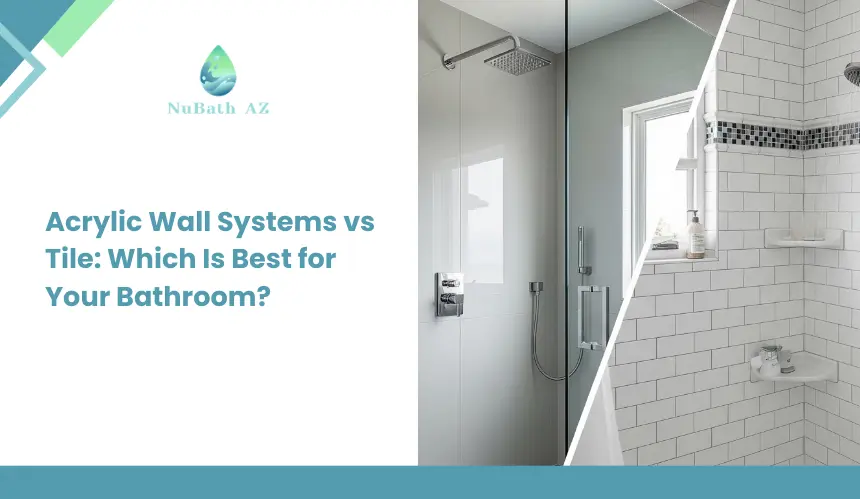
Acrylic Wall Systems vs Tile: Which Is Best for Your Bathroom?
Quick Answer: Acrylic wall systems and traditional tile offer two distinct approaches to bathroom walls. Acrylic panels are lightweight, seamless sheets made from fiberglass-reinforced acrylic or similar materials, designed to provide a fully waterproof surface that’s quick to install and easy to maintain. Tile walls, including ceramic, porcelain, or natural stone, are composed of individual pieces set with mortar and grout, offering durability, design flexibility, and long-term resilience.
Did you know? Acrylic panels can be installed in a single day, making them a preferred option for homeowners in Phoenix neighborhoods like Arcadia and Encanto who want a quick renovation, while tile installation can take several days due to curing and grout requirements. |
When it comes to bathroom walls, homeowners face a key decision: choose traditional tile or a modern acrylic wall system. Each option has unique advantages, costs, and maintenance requirements that can impact both the functionality and aesthetics of your bathroom.
In Phoenix and surrounding areas such as Scottsdale, Glendale, and Ahwatukee, local climate and home construction styles influence how these wall systems perform. For instance, the intense desert heat can affect grout integrity in tile installations, while acrylic panels handle thermal expansion more easily and reduce maintenance concerns.
This guide provides a comprehensive comparison, examining installation ease, durability, maintenance, cost, and design options. By understanding the strengths and limitations of each system, homeowners can make informed choices that improve bathroom longevity, safety, and visual appeal.
Installation and Maintenance Overview
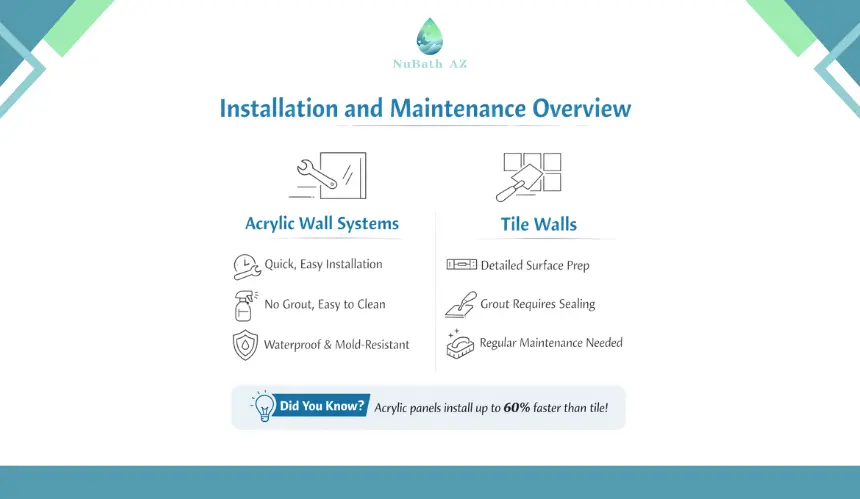
Choosing between acrylic wall systems and tile often comes down to installation complexity and ongoing maintenance requirements. Each option has distinct advantages depending on the homeowner’s priorities, bathroom layout, and local conditions in Phoenix and nearby areas such as Arcadia, Paradise Valley, and Glendale.
Ease of Installation
- Acrylic Wall Systems: Lightweight, large panels allow for quick installation with minimal wall preparation. Most panels can be installed in a single day, making them ideal for homes with time constraints or older walls that may be uneven.
- Tile Walls: Require careful surface preparation, precise alignment, and grout application. Installation can take several days, including drying and curing time. In neighborhoods with older homes, such as Encanto, extra leveling or subfloor preparation may be necessary.
Did you know? Acrylic panels reduce installation time by up to 60% compared to traditional tile in standard bathrooms.
Maintenance Requirements
- Acrylic Panels: Easy to clean with non-abrasive wipes; fully waterproof surfaces prevent mold and mildew growth. No grout lines mean fewer areas for dirt and moisture accumulation.
- Tile Walls: Grout lines require regular sealing to prevent mold, discoloration, and water infiltration. Cleaning may be more time-consuming, particularly in high-humidity areas.
Climate Considerations
- Desert heat in Phoenix can cause tiles and acrylic panels to expand and contract. Acrylic panels naturally accommodate slight material expansion, while tile may require flexible adhesives or grout additives to prevent cracking.
- Older homes with retrofitted walls may benefit from acrylic’s forgiving installation process, avoiding the need for extensive wall modification.
Durability and Longevity Comparison
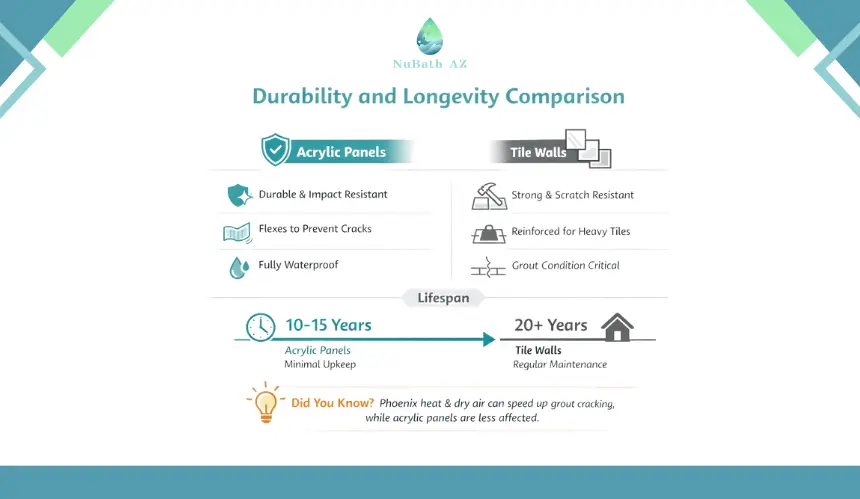
When choosing between acrylic wall systems and tile, durability and lifespan are key considerations. Both materials perform differently under daily use, moisture exposure, and climate conditions, especially in Phoenix and surrounding areas such as Scottsdale, Glendale, and Ahwatukee.
Material Strength and Impact Resistance
- Acrylic Panels: Lightweight but durable; resistant to minor dents and cracks. Panels can flex slightly, which helps prevent damage in homes with settling or older walls.
- Tile Walls: Extremely strong and scratch-resistant; high-quality ceramic or porcelain tiles can last decades if properly maintained. Heavy tiles, however, require reinforced walls and subflooring.
Resistance to Water Damage and Moisture
- Acrylic Panels: Fully waterproof and seamless, preventing leaks and mold growth behind the wall. Ideal for areas with high humidity or frequent showers.
- Tile Walls: Water resistance depends on the integrity of the grout. Cracked grout or improper sealing can allow moisture infiltration, leading to mold or water damage over time.
Lifespan and Maintenance
- Acrylic Panels: Typically last 10–15 years with minimal maintenance, and minor scratches can often be buffed out.
- Tile Walls: Can last 20+ years or more if properly installed and maintained. Grout and sealant require periodic upkeep to maintain longevity.
Did you know? In Phoenix-area homes, extreme heat and dry air can accelerate grout cracking in tile walls, while acrylic panels are less affected by thermal expansion and contraction.
Cost and Value Comparison
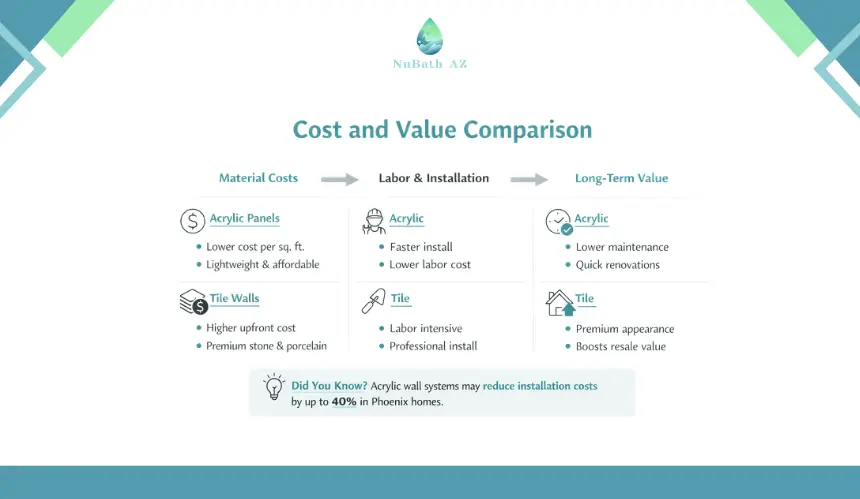
Cost is a major factor when deciding between acrylic wall systems and traditional tile. Homeowners in Phoenix and surrounding areas, such as Arcadia, Paradise Valley, and Glendale, need to consider not only upfront costs but also long-term maintenance and potential resale value.
Material Costs
- Acrylic Wall Systems: Generally more affordable per square foot. Panels are lightweight, reducing shipping and handling costs.
- Tile Walls: Higher upfront cost due to material variety, including ceramic, porcelain, and natural stone. Premium tile selections can significantly increase the budget.
Labor and Installation Expenses
- Acrylic Panels: Easier and faster to install, often allowing for DIY installation or lower professional labor costs. A full bathroom wall can be completed in a day.
- Tile Walls: Installation is labor-intensive, requiring precise alignment, grout application, and curing time. Professional installation is typically recommended, increasing overall costs.
Long-Term Value
- Acrylic Panels: Lower maintenance and waterproofing reduce long-term repair costs. Quick installation makes it an attractive option for homeowners wanting fast renovations.
- Tile Walls: Durable and premium aesthetic appeal can enhance home resale value, especially in upscale Phoenix neighborhoods like Paradise Valley or Arcadia.
Budgeting Tips for Homeowners
- Factor in material, labor, and maintenance when comparing total cost.
- Consider the bathroom’s usage, moisture exposure, and local climate impact.
- Evaluate potential long-term value: tile may cost more initially, but could add resale appeal, while acrylic panels save on installation and upkeep.
Did you know? On average, acrylic wall systems can reduce installation costs by up to 40% compared to tile in Phoenix-area homes, while still providing excellent water resistance and aesthetics.
Aesthetic and Design Considerations
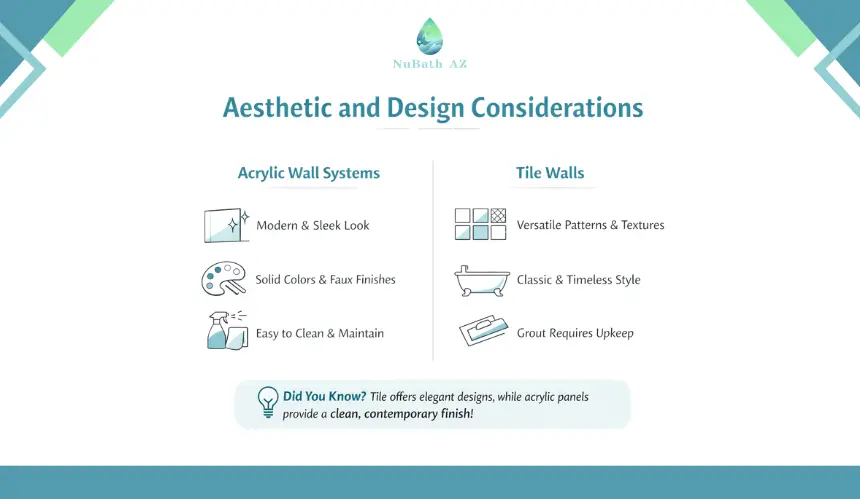
Choosing between acrylic wall systems and tile isn’t just about cost or durability; it’s also about the look and feel of your bathroom. Each option offers unique design possibilities that can influence the overall style, especially in Phoenix-area homes and surrounding neighborhoods like Scottsdale, Glendale, and Ahwatukee.
Color and Pattern Options
- Acrylic Panels: Available in a wide range of solid colors and faux finishes, providing a clean, uniform look. Seamless panels create a modern, minimalist aesthetic.
- Tile Walls: Offer virtually unlimited patterns, textures, and colors, including mosaic, stone, and ceramic designs, creating intricate, customizable visual effects.
Seam Visibility and Finishing
- Acrylic Panels: Can be installed with virtually invisible seams, creating a sleek, contemporary appearance.
- Tile Walls: Grout lines are visible, which can add texture and pattern but may discolor over time or require periodic cleaning.
Compatibility with Bathroom Fixtures
- Acrylic and tile both coordinate with a variety of bathtub and shower styles, vanities, and countertops. Acrylic panels can match well with modern walk-in tubs or acrylic tubs, while tile often complements freestanding tubs or luxury stone finishes.
Maintenance and Aesthetic Longevity
- Acrylic Panels: Easy to clean and maintain; resistant to staining and color fading, making them ideal for busy households.
- Tile Walls: Require ongoing grout maintenance and sealing; however, premium tile can maintain its aesthetic appeal for decades if properly cared for.
Did you know? Many Phoenix-area homeowners prefer acrylic panels for quick renovations and a modern look, while tile remains a popular choice in upscale neighborhoods like Arcadia or Paradise Valley for its timeless elegance.
Frequently Asked Questions
Which wall system is easier to install?
Acrylic wall systems are faster and simpler to install, often completed in a single day, whereas tile requires careful surface preparation, precise alignment, and grout curing, which can take several days.
How do maintenance requirements differ?
Acrylic panels are virtually maintenance-free, easy to wipe down, and fully waterproof. Tile requires grout sealing and regular cleaning to prevent mold, mildew, and discoloration over time.
Which option is more durable in desert climates?
Tile is extremely durable and scratch-resistant, but grout lines can be affected by high heat and expansion. Acrylic panels handle slight temperature changes well and are less prone to cracking in Phoenix-area homes.
Can acrylic panels be used in older or uneven walls?
Yes. Acrylic panels are flexible and can adapt to minor wall imperfections, making them ideal for older Phoenix homes in neighborhoods like Arcadia or Encanto, where walls may not be perfectly level.
How do costs compare between acrylic and tile?
Acrylic panels typically cost less upfront and reduce labor expenses due to easier installation. Tile may have higher material and labor costs, but it can add long-term value and aesthetic appeal, particularly in upscale neighborhoods like Paradise Valley.
Are professional installers necessary for either system?
Professional installation is recommended for tile to ensure proper alignment, grout application, and waterproofing. Acrylic panels can often be installed by experienced DIYers, but hiring a professional ensures a seamless fit and long-term durability.